2026年10月11日
What We Learn from Caring for International Patients
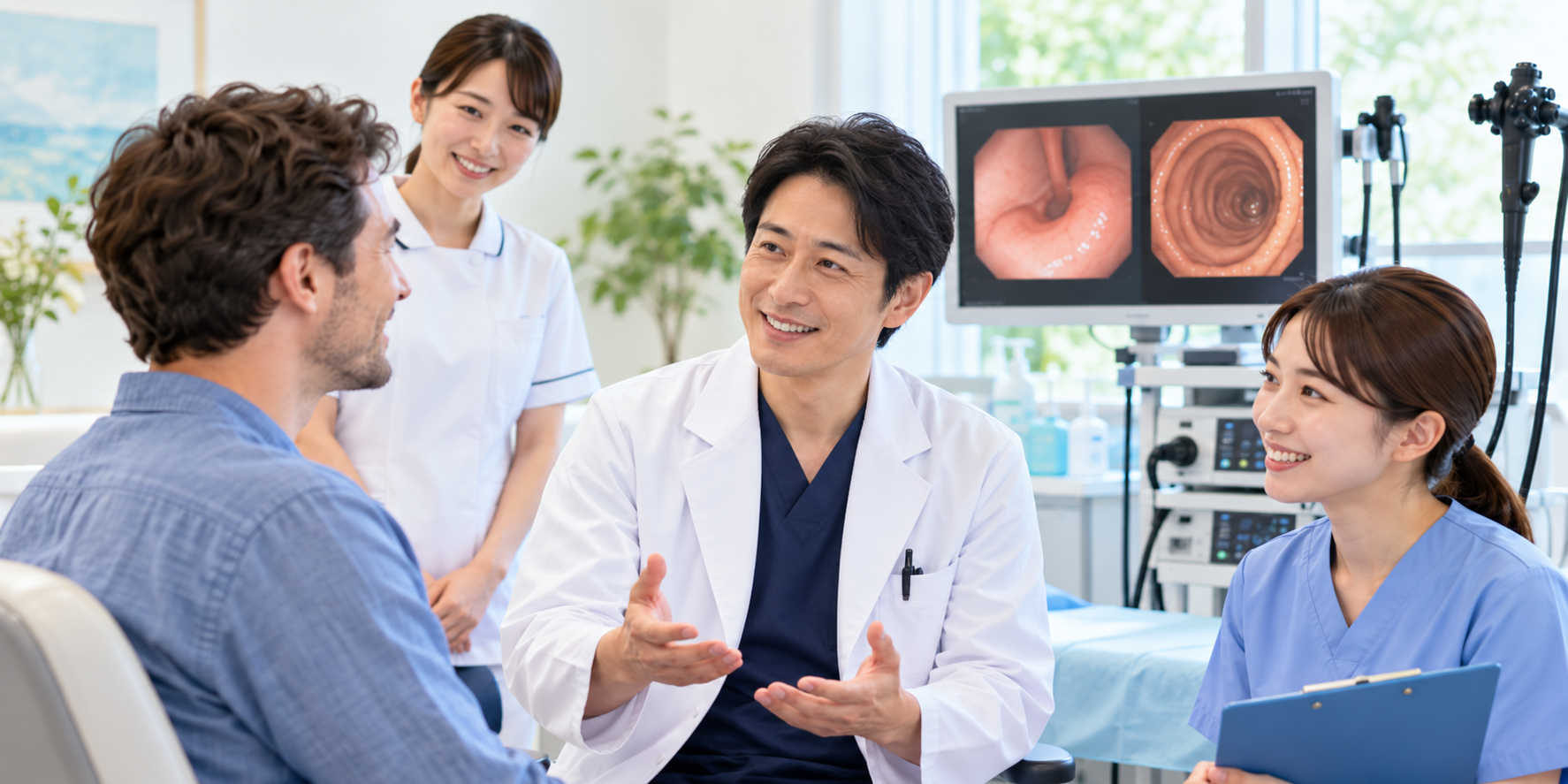
Since the renewal of our clinic, we have had opportunities to provide medical care, including gastrointestinal endoscopy, to patients from many different countries and backgrounds.
Language assistance is important, but communication in medicine goes beyond translating words. Through consultations, examinations, and treatment, we also have opportunities to learn about different ways of thinking, different concerns, and different expectations of medical care. Each encounter opens a small window through which we can see a wider world.
From time to time, our staff ask ourselves:
Have we helped this patient find the care that is best for them?
Did the patient feel free to ask questions and express concerns, even in an unfamiliar medical environment?
When facing a difficult situation, did the patient feel that they could remain calm and face it together with us?
Different Paths, the Same Destination
Interestingly, when we try to answer these questions, we arrive at the same place we do when caring for people in our local community.
Patients may come to us by different paths, speak different languages, and have different experiences of healthcare. Yet what they need from us is often very similar: to be heard, to understand what is happening, and to participate in decisions about their own care.
There is an old expression, 殊途同帰 — different paths may lead to the same destination.
Caring for international patients is not separate from community medicine. Rather, these encounters remind us what good medical care should be for every patient.
Before Your Gastroscopy or Colonoscopy
Length and place of stay
If you are visiting Japan for your examination, we recommend allowing at least 3 nights and 4 days and staying somewhere within easy reach of the clinic.
For example, you may have your consultation on Monday and your endoscopy on Tuesday. You may not need to visit the clinic on Wednesday, but we ask that you remain nearby so that you can return promptly if necessary.
This schedule allows time for appropriate follow-up should you need additional care after the procedure.
Name used for registration
Please make sure that the name used for your patient registration exactly matches the name shown on your passport. This can help avoid problems if medical certificates, receipts, or other documents are required later.
If you do not have a Japanese health insurance card or My Number Card, please bring your passport.
Language assistance and other information
Please let us know if you need language assistance during your visit. Please also see our website for information about access to the clinic and payment methods.
Medical Review
Akira Higashimori, MD
Director, Higashimori Clinic
Gastroenterology and Gastrointestinal Endoscopy
Dr. Akira Higashimori specializes in gastroenterology and gastrointestinal endoscopy. He has worked in hospital-based gastroenterology and endoscopy and has also studied and conducted research at The Chinese University of Hong Kong.
At Higashimori Clinic, he provides general medical care as well as gastroscopy, colonoscopy, and preventive gastrointestinal care, with an emphasis on clear communication, patient comfort, and helping each patient make informed decisions about their own care.
ひらの色。 — Hirano Iro
Kind to people.
Care that feels easier to receive.
Bringing the tomorrow you hope for a little closer.
People may speak different languages and come from different cultures, but the fundamentals of good medical care do not change.
We want every patient who comes through our doors—whether they live here in Hirano or have travelled from another country—to feel that they can ask questions, understand their options, and receive care without unnecessary anxiety.
For us, caring for international patients is simply another part of being a community clinic.
Different paths may bring us here, but the care we hope to provide remains the same.
This, too, is ひらの色。